On May 27, 2026, APX Lending hosted a fireside chat with DLA Piper focused on the future of crypto-backed lending, regulation, stablecoins, DeFi, and digital asset innovation in Canada.
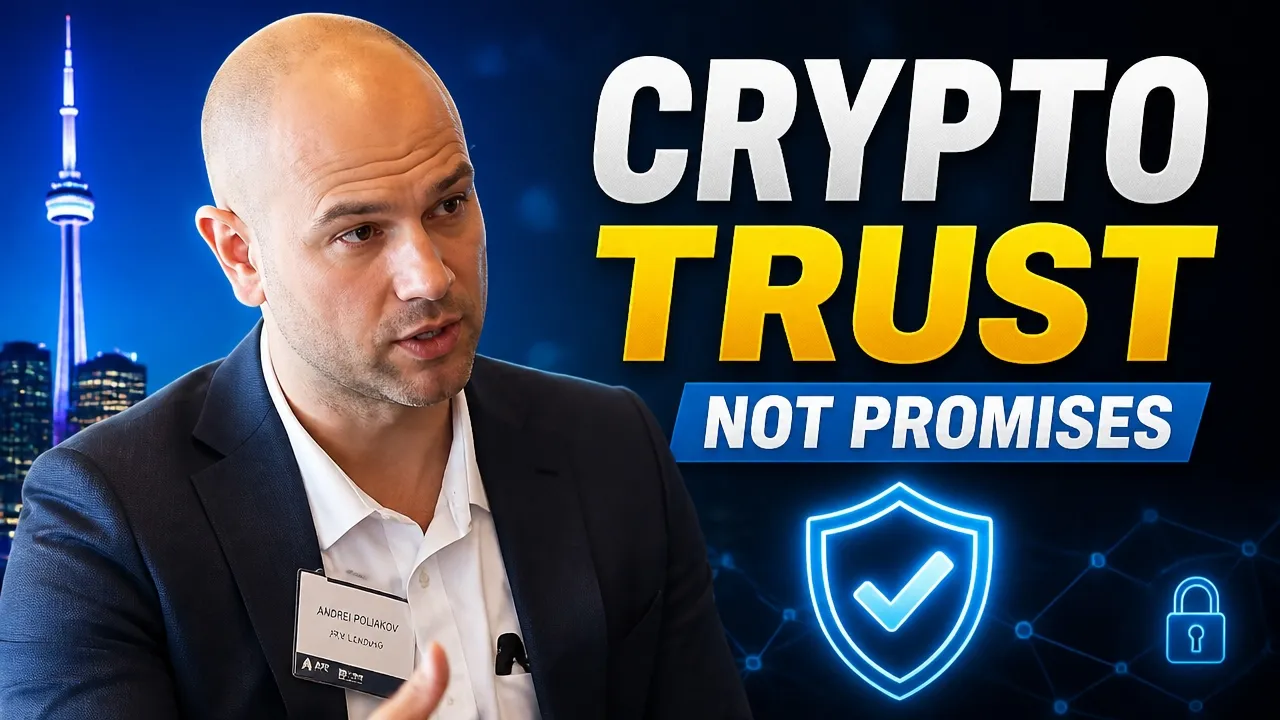
The discussion featured APX Lending CEO Andrei Poliakov and DLA Piper partner Jarrod Isfeld, who explored how Canadian regulators are approaching crypto lending, why APX pursued exemptive relief with the Canadian Securities Administrators (CSA), and how trust, custody, transparency, and compliance are shaping the next generation of crypto financial services.
The conversation also covered the differences between Canadian and U.S. regulatory frameworks, the impact of AI-driven fraud on financial compliance, the role of stablecoins in lending markets, and the challenges Canadian crypto companies face when competing globally.
This transcript has been lightly edited for clarity and readability.
Key Takeaways
APX Lending became one of the first crypto-backed lenders in Canada to obtain exemptive relief from Canadian securities regulators.
Canadian regulators currently view certain crypto-backed lending arrangements as potentially involving “crypto contracts,” bringing them within securities law oversight.
APX and DLA Piper argued that borrower protection, custody transparency, and collateral segregation were central to building trust in crypto lending after failures like Celsius, BlockFi, and FTX.
APX Lending uses segregated cold-storage custody structures where borrowers can verify collateral on-chain throughout the duration of the loan.
Unlike the United States, Canada applies securities regulatory oversight to parts of the crypto lending ecosystem.
The panel discussed how DeFi lending could eventually evolve within compliant regulatory structures, though significant borrower protection concerns remain.
Stablecoin regulation in Canada remains unclear, particularly regarding how securities law and banking oversight intersect.
Canadian crypto companies continue to face challenges related to banking access, investment capital, and regulatory complexity compared to the United States.
The discussion also addressed emerging AI-related fraud risks, including the use of fake AI-generated financial documents in lending applications.
Both speakers emphasized that long-term industry growth depends on collaboration between innovators, regulators, custodians, and financial institutions.
Summary
In this fireside chat, APX Lending CEO Andrei Poliakov and DLA Piper partner Jarrod Isfeld discuss the evolution of crypto-backed lending regulation in Canada and the broader digital asset ecosystem.
Topics include the Canadian Securities Administrators’ approach to crypto lending oversight, why APX pursued exemptive relief, lessons learned from centralized crypto lending failures, and the importance of custody, transparency, and collateral protection.
The discussion also explores DeFi lending models, stablecoin regulation, banking relationships, AI-driven fraud risks, and the growing competitive gap between Canadian and U.S. crypto markets.
The session concludes with audience Q&A covering margin lending, stablecoins, privacy coins, banking friction, and the future of crypto innovation in Canada.
Andrei Poliakov of APX Lending with Jarrod Isfeld of DLA Piper Transcript ===
[00:00:04] Andrei: Good morning, everybody. Happy to see you all here. I I wanted to start off by thanking our partners here at DLA for co-hosting with us this wonderful event for Toronto Tech Week where we'll be talking about all things crypto lending and credit related.
And, hopefully have a really informative discussion fun discussion. And, I welcome you to ask questions. Maybe keep your questions to the end of the, panel and the fireside chat. But, feel free to participate so we can make this a lively interaction.
So my name is Andrei. I am the CEO and founder of APX Lending or APX Lending. We like to pronounce it as APEX Lending. Unfortunately, APEXlending.com was taken, so we had to go with APX, but we still pronounce it as APX. I've been in, in this industry, in the crypto industry for almost 10 years at this point in time.
I used to run a company called Coinberry which I launched in 2017, which became the first crypto trading platform to receive regulatory or to become regulated in Canada back in 2020 at this point in time. I've had the fortune of working with, Jared and, Russ there in the back two great partners from DLA Piper for the, I think the vast majority of the, of those l- of those 10 years and they've helped me build these Canadian, Canadian homegrown regulated crypto businesses and really help push the industry forward in Canada, which I'm super excited to do.
I wanna thank my team here. If I could just have my team members stand up just so people know who we are. So we have Taha over here, who is our wonderful CTO at APX. We have Ria over there that helped organize this entire event and a lot of Ria's a lot of work on that. Emanuel here somewhere as well. There's Emanuel. And we'll have some more people showing up throughout the day as well. Without further ado, I want to introduce Jared.
[00:02:10] Jarrod: I'm Jared Isfeld. I'm a partner in DLA Securities and the Financial Services Regulatory Group. I've been working in the crypto space really since it became an area of regulatory practice in Canada, so many years.
I primarily work with fintech and crypto companies to help them navigate the Canadian regulatory regime. And sometimes we're lucky enough to do novel relief like we did for Coinberry and more recently APX. Sometimes that's structuring the business to get the right regulatory outcome. So yeah happy to be here today and hopefully we can lend a little bit of insight from our experience in the crypto regulatory space, in particular where it intersects with lending.
[00:03:02] Andrei: Amazing. Lending insight- Lending insight ... for a lending business. There you go. So I think something that's really interesting that you just mentioned is Canadian regulators and working with Canadian regulators. If we take a look at what's happened in the, crypto lending industry globally really obviously everybody's well aware of Celsius's, the BlockFis of the world that the failures of, of,
[00:03:26] Jarrod: 2022
[00:03:26] Andrei: '20, exactly, 2022, the FTXs. More recently Blockfills- Yeah ... beginning of this year. And those, are all centralized businesses, but also we keep hearing about protocol failures. We recently had Aave fiasco if I'm not mistaken, something around two hundred million got locked up in, in bad collateral.
So when we talk about regulation, we talk about trust. And so I wanted to ask you your opinion. Insofar as trust is concerned and when borrowers and institutional retail borrowers are looking for the regulatory sort of stamp of approval, what what does trust actually mean to you as, a, securities, as a crypto lawyer insofar as regulatory oversight of crypto businesses, crypto lending businesses?
[00:04:25] Jarrod: I think that's the answer right there. You can have a brand name, you can have code audits you can have a lot of momentum in, in finding investors. Just look at FTX. But if you're not regulated there's been no sort of trusted third party who's looked under the hood at what the business is doing.
Is the disclosure accurate? Does the disclosure say what you think it says? When we either get registered or apply for regulatory relief, especially in the lending space, the regulators take a deep dive under the hood. They look at your loan agreements. They look at your policies and procedures.
They make sure you have a business continuity plan. They insist that you have conflicts policies that are commensurate with the conflicts that a registered dealer advisor under 31103 has to have. They make sure that segregation is true segregation and that your custodian is qualified and has their SOC2 audits.
And they, they-- when you issue a press release, they vet it to make sure that if you say something that they don't like, you're gonna get a call from the regulator saying "why did you say this in your press release? Is it true?" So if you're unregulated you don't need any of that.
You don't need a conflicts policy. You don't need business continuity plans. A- and if you are a counterparty, whether you are an institutional lender or whether you are a borrower what are your protections? You've got the loan agreement, and hopefully that loan agreement is in a jurisdiction that you can sue or take action in it, it's not offshore.
And so yeah, for me, right-- the other thing is it's not just you go in, you apply for exemptive relief or for registration, whatever it is, and it's done. There's continuous oversight. So Andrei, APX has got to report to the commissions on a regular basis. You better believe if there is a significant event in the crypto market generally, APX is getting a call from the commission saying, "Are your LTV ratios still working?
How does this impact you?" So to me, it's kinda night and day from a trust perspective, regulated entity versus regulated. Doesn't necessarily mean that a company wouldn't act with the same level of rigor and have the same policies if they're not regulated. But you don't know. So it's that. It's kinda my perspective.
[00:07:12] Andrei: Yeah. And I think, from our-- getting those phone calls is definitely always a jolt in the middle of the night. Thank God it hasn't happened in a while. But we do have-- we do get calls from the emails from the OSC, I would say after market movement, market events like that.
And it's it's good to see that they, have a sort of a, check on the pulse on a continuous basis. One thing that you and I have discussed at length is regulation is good. I don't think anybody's gonna argue that within sort of reasonable limits, right?
But lending as a business has been around for a very long time. And, lending in Canada is generally not regulated by securities law. And I remember when we when we announced our exemptive relief last year I actually got a bit of heat on LinkedIn and various lawyers around Canada had a different opinion on whether securities law applied at all and why we went this route.
And so I think -- and this is something that comes up every once in a while. I get this question of like, why, Funny enough even from industry from some of our competitors in industry wondering why we went this route. So maybe you can share with the audience here, why did we go through the Securities Commission at all.
[00:08:49] Jarrod: Yeah we're gonna run out of time in an hour.
Yeah, I get the same feedback. So I'll try to be brief, but one of the things and I don't mean to be pedantic, and I apologize if I'm just telling people things they already know, but it's important to understand that the Canadian securities regulations are policy-based. They're broadly drafted, and what that means is the commissions can take jurisdiction when they feel there's a need to, broadly speaking.
And, they felt the need to when we got exemptive relief for crypto asset trading platforms, and they felt the need to in lending. The trouble is, how do you get there? Because you'd think if you lend somebody money, you're not issuing them a security. You'd think it'd be the other way around, and you'd be right, except in crypto.
And so what the regulators said was that because the lender is taking a crypto asset as collateral, has control over that crypto asset, ongoing mo- monitoring that asset on an ongoing basis, has the ability to liquidate it, so control. That might be-- They never said it is, but they said it they said it's a crypto contract, effectively, which is a concept they came up with when they determined all their guidance around CTVs.
And it's a nebulous and broad concept. So they said because a crypto contract is created, there may be a security. They've never gone on the record said that there is a security, but they said there may be. And then they also said that because these crypto contracts are being created regularly, and there's fees associated, and there's frequency in these, lending transactions, that there may be dealing.
So then the question is, okay, so you've got potential pers- prospectus issues and you have potential dealing issues. How do you deal with that? So do you issue an OM to get around the prospectus requirement? How can you? What would that say? "I'm offering you an obligation to return your collateral."
Doesn't make sense. On the dealing side, okay, do we get registered as a dealer? And we went through this with the regulators, and that doesn't make sense either because how do you do KYC on KYP suitability in the context of lending somebody cash, right? None of the policies that, that work or that are typically, have, to get undertaken by dealers really fit here.
So the only solution was exemptive- The regulators were clear that they did want to take jurisdiction. One of the reasons they wanted to take jurisdiction is there's very-- is they look at lending as part of the broader crypto asset trading ecosystem. You see it all as interrelated. For example, they don't want proceeds of your loan to be used for, to buy more crypto.
In Canada, I think there are only four provinces that require you to get licensed to lend people money, and it's not particularly difficult to get those licenses, and the regulatory regimes aren't particularly robust. So the regulators looked at this and said, "There's a gap. We've got broad scope to apply this crypto contract concept.
We're gonna take jurisdiction."
Are they with the regulators, right? I don't know if any of them are here, but it's pretty debatable, but that's where we're at.
[00:12:44] Andrei: Yeah. I think from our perspective and we-- pre- or prior to those discussions we, requestioned the approach the regulators took early on quite a bit.
And we even pushed back. But fundamentally, I think from, my perspective, the the value... And again, keeping in mind that this is pertinent to a nascent industry, an industry where there are, or continuously and especially in the past, big blow-ups that took place where trust was eroded, especially trust in in, crypto lending or crypto-backed lending businesses globally was eroded.
And we saw value in working with the regulators, notwithstanding that perhaps we didn't see eye to eye 100% of their perspective. But we did see value in working with them and putting in place all of the requirements that they had demanded of us. And fundamentally, all of those requirements were for the betterment of protection.
I can, say that with absolute certainty. Everything that they requested us to do was first and foremost to the benefit of the borrower. And so to me, yes, it was a lengthy process. It took us about two years. It was a very expensive process. I think Jared probably now owns not one but two Lambos.
But, it was a, very valuable, I think, exercise. And it helped really push the industry forward, again with one of the most robust regula- or within one of the most robust regulatory regimes in the world insofar as security is concerned. Canadian regulators have a really strong global brand.
And so for us to be able to build a, viable business within the, this, regime really elevates not just the Canadian crypto industry, but the global crypto-backed lending industry as a whole. And now we're able to go out as a Canadian business. And so for those of you that maybe don't know, we, we have two verticals to the business at APX Lending.
We have our primary vertical, which is our regulated lending business. So we lend to within Canada and the US. So we lend against Bitcoin and Ethereum. This collateral is custodied with qualified custodians. It's not rehypothecated. It's not it's not reinvested. It's in cold storage.
And what's very unique to our business, it's also visible to the borrower for the duration of the loan. So it sits in segregated cold storage custody. And so we don't need to wait for quarterly or, biannual audits to see your collateral and to make sure that it's actually there.
You can see it on-chain 24/7. So it's a very unique concept that we built out. And which again, gave the regulators that comfort because they can also check and make sure the collateral is not being reinvested or moved around or rehypothecated. So at the end of the day the, number one risk as a borrower when you're taking out an over-collateralized loan, when you're giving up more collateral than the loan you're getting, is that you lose your collateral, right?
Because, that's the one... That's the main risk really that you're concerned with. And so I'd say, I would say 90% of our focus, putting together the whole business structure was how do we address that risk? And again cold storage, third cold storage, segregated cold storage, and visible transparent cold storage is how we address some of those risks.
So through that work with the regulators, we ended up building out a very robust business model that protects the borrower. And so again, going back to my, my, my original question, we decided to work with the regulators, not against them and not fight them and go to court or not not, leave the country, but stay in the country and build together with them.
And I think we did a pretty good job. It, wasn't an easy process. It was a very long process, a lot of education. Again, we were the first company to do this, so a lot of education, a lot of back and forth, figuring things out that have never been done before addressing questions that nobody had to address before, I think that came through from the regulators.
But it was very exciting as a process and we're very excited to keep innovating. And this is just the first sort of-- the first step in, in what a crypto-backed lending business could look like. Right now it is Bitcoin, Ethereum backed loans and loans in Canadian dollars and, USDC.
But we are working on very cool and innovative products that we'll launch very soon. You can see those online. So we keep pushing forward. We keep working with the regulators to advance things. And so it-- going back to our first-- I remember when we came into actually probably Russ remembers this.
When we first came and talked with the OSC when we launched Coinberry, this was back in 2017 when they didn't know much about crypto at all. I remember there was-- they must have gathered I don't know, 20 or 25 lawyers and it was me, Russ, and one of our CCO from Coinberry. And it really was just an educational chat at first.
And so I feel like with APX it was the same thing. But I'm very curious to, to to hear your opinion, Jared. So you've been-- you've seen the industry evolve and you've seen the regulatory frameworks evolve. So from the first wave of CTPs getting regulated in Canada to now let's call it the second wave of lending businesses getting regulated, what have you seen in terms of if anything of a different approach from the regulators or a different perspective, or have they become more lax, less lax, more, responsive, less-- Like what have you seen from your perspective insofar as regulators in Canada are concerned?
[00:19:06] Jarrod: Yes, that's a good one. I think first I think it's important to note that I drive a 2020 Volvo and But yeah, Andrei's right. Back in 2017, it was all new, and regulators were trying to figure out-- Were first trying to figure out, okay, do we take regulatory authority over the space?
How do we do it? Do we differentiate between cryptocurrencies that are securities and those that are not? And it was really all about safely purchasing securities through platforms, and that's something that the regulators were familiar with. What they weren't familiar with is what, is a crypto- and, all the regulatory sort of consideration.
Once they figured out what they were, how they worked, then the regulatory considerations fell into place. So how do you protect investors? You limit the amount of small investor companies how you ensure that you have disclosure on what the product is And it could have gone a couple of ways.
It could have become more and more comfortable. When I say they he was more and more comfortable with the crypto space and had more, more fulsome
That's what I'm looking for rules that weren't time-limited. So they could have put in place a more, more solid regime rather than individual exemption relief orders for each company. But then there was volatility in the crypto market. Regulators determined, "We've got to double down on regulation here.
This is something that needs strong regulatory oversight." they haven't changed. And I'll talk about what's changed, but what hasn't changed is the regulator's approach to, "We've got to regulate this. We've got to figure it out, and we've got to provide sort of bespoke solutions to each new business model."
[00:21:25] Andrei: In all of that, guiding the technology, getting all building out of it to address their concerns really at the technology. So I was mentioning earlier the two verticals to the business model, the gene, but the second part we have to fight. So we actually license out our technology to lenders globally.
There's a regulated lenders Europe that are using us in the US and, so it, it really does that work with the regulators and all of their due diligence all their pushbacks and really to your point, making sure that it's not just the disclosures or the risk statements that go here, but really that the business business setup itself is is viable really allows us to build more of that license out, which is really exciting.
I think it's exciting in general for Canada based in the industry, we're able to export our technology globally.
[00:22:31] Jarrod: I know you're probably gonna ask this question right back at me, but what do you see as the next steps for the lending industry? So we've got rules now, right? And we know what we can do, or you can do, APX can do.
But when we first got exemptive relief, because we were the first and we had to educate the regulators on how the business works, and they had to go across the country to get approvals from all the other commissions, they were-- You know, a lot of the flexibility that we tried to work into the order, they said "Whoa, Let's just take this one step at a time. Let's just get this through and then come back to us, and we'll let you do all this other stuff," which we're gonna hold them to. What is that other stuff? Or are you giving up
[00:23:27] Andrei: your-
[00:23:27] Jarrod: You gave up your business-
[00:23:28] Andrei: Yeah ... and layout strategy. No look, I think the reality is things are moving very quickly south of the border.
The crypto industry, for better or for worse, got a sort of a stamp of approval from the from the US government. And so things are moving very fast. And like from a vantage point, I can see how the Canadian-- Like as a Canadian industry, we are starting to lag behind. We had some phenomenal projects that were launched in Canada, Ethereum, Binance originally very early days.
And now nobody really stayed in Canada from the big projects. And I think that's a big loss. That's a big problem I think for for our industry. And the reality is things are moving very fast south of the border with crypto. And we're looking at access to DeFi that's happening there.
Obviously, we are a centralized lender. We are a centralized regulated lender meaning that when you borrow, you're borrowing from us as an entity, and then we work with funds to source credit that we then lend out to our borrowers. But of course DeFi as a, as an innovative way to match borrowers and lenders without anything, any intermediaries is a really exciting frontier.
Now, how do you take DeFi as a technology and put it within a compliant wrapper? That's the million-dollar question. And that's I think something that we'll probably start looking at answering as well. But again within, this sort of understanding that borrower protection or collateral protection is the number one concern.
And so far we see problems with that in the way they function and the regulatory problems. That's, the reality of it. It's, working together again with-- In, in answering that-- In answering those questions, we really we-- that's where the innovation comes in. But really it's to within lending it's to give people access to more, a bigger variety of products, whether it's collateral or loan proceeds at the best rates possible and, the highest flexibility.
That's that's really, It's not a hard concept, it's the execution that's, the hard part. So we're really excited. We're we keep we are really excited in what's to come. I think the tailwinds in the US have helped a little bit here. I think the regulators have, even to a certain extent, the government has understood that something needs to be done.
And so that, that's helped. And we we hope to continue to push things forward and really bring them-- at least bring new ideas to the table and see how we can get across the finish line. Thanks. All right, so that brings us to the end of the panel session.
Questions for Jared or myself
[00:26:42] Question1: Yes. you mentioned earlier that you when you give a loan, it's not to buy more Bitcoin. How did the regulators get comfort with that as a, use of loan proceeds?
[00:26:57] Andrei: Again, I can address that. So I think not to buy more Bitcoin was maybe a bit of a-
[00:27:03] Jarrod: And I said they don't like that to happen, so we had some back and forth with them on it, and we're-- they've already bought the Bitcoin.
They're there. So who are we... We had this debate with the commissioners, right? Who are we to say what people do with their money? There's a lot more dangerous things than Bitcoin they could put their money into. And I think where we landed was as part of account appropriateness, which is not KYC, it's a much lower standard.
[00:27:35] Question1: I guess a follow on, do you see the market evolving to having margin accounts on Bitcoin as the next step now that you can do a loan on Bitcoin?
[00:27:45] Andrei: Yeah. Look, I think that's, I think the regulator's primary concern is is leverage trading as margin trading at this point.
Yeah, I think they're just afraid people are gonna pull up positions. Inarguably, regulators mandate to tell people how to use their use their loan proceeds. Again, whether it's wrapped in a margin account or you have to go through somebody like APX and then take those funds back to an exchange.
But yeah I, Eventually we have margin trading on regulated stock exchanges. So eventually but I think we're probably still a bit ways off.
[00:28:29] Jarrod: I have a different take on offering leverage margin on- business here because it's not like your your margin account with your broker where it becomes a personal liability, right?
If you go under and you get what we call liquidity cascade. Here the collateral is just the-- the security is just the collateral. It's coming out of your house, no personal liability. So I think it's problematic for the regulators to look at leverage here the same way they look at leverage trying to get that point across
[00:29:18] Andrei: Any other questions?
[00:29:19] Question3: So regulatory, what are the differences between obtaining US approval and Canadian approval regulatory as you expand to the US and Canada? So is there some significant delta between the approach that they, you-
[00:29:33] Jarrod: Yeah. So remember when I was saying you wouldn't think lending somebody money would be issuing a security?
That's exactly what the American regulators think. So they don't see this as an issuance of security. It's just in Canada. You don't have to worry about securities regulation in the US to do the lending business. But there are other-
[00:29:58] Andrei: Yeah.
[00:29:59] Jarrod: There are other regulatory regimes in the US you have to deal with state by state.
[00:30:03] Andrei: Yeah. So basically it's it's like in, in Canada, you have province by province or state by state lending licenses. But then in Canada, you also have the Canadian Securities Administrators or the OSC as our primary regulator overseeing this as well. In the US, you just have the lending licenses, so you don't have the SEC overseeing it.
So makes things considerably simpler and allows them to move a lot quicker as well. And when things are simple.
[00:30:32] Question4: What do you think we would have to see or what would like a catalyst be to incentivize the Canadian regulators to play catch up with the US and push forwards to incentivize people to start building in Canada?
[00:30:43] Andrei: Probably probably a, pro-crypto, it has to come from the top, right? Yeah. So like pro-crypto government or, a leader, a champion that's, very high up that that sees the benefit of people are very excited about blockchain, and people are very excited about AI, but it's if we just see things through, maybe we can have longevity in blockchain and then longevity in AI as industries.
It's great to have a champion up at the very top that consistently push push this forward because hey that's, how ultimately it's gonna happen. I agree 100%.
[00:31:29] Question5: Are there any conversations around regulation changing for privacy coins? So things like Monero, XMR, right? Zcash. Currently those are illegal to trade and to lend. Is there any ongoing conversation in that world?
[00:31:47] Jarrod: Not to my knowledge, but my knowledge is limited, so check.
[00:31:55] Andrei: Yeah, no I have, I-- not, the privacy coins specifically.
Not that I know of. Other, cryptocurrencies, yes.
[00:32:06] Question7: You saw a couple weeks ago, Australia recently adjusted its AML guidelines to start viewing real estate professionals, accountants, and lawyers, and administrating them under the AML/CTF guidelines because the Commonwealth Bank was found to issue about a billion dollars of loans using fake AI-generated financial statements, documents, and payroll stubs.
How are the regulators viewing some of the emerging risks with AI and the fraud vectors that could impact more widely?
[00:32:41] Jarrod: I haven't heard much on any amendments or new initiatives on AML relating to cryptocurrency. I don't know how long ago it was they clarified that if you're a money services business, if you're in the crypto trading business. And so you've got to do your monthly reporting, you've got stuff to do with the FinTrack KYC requirements But other than that, it's not my specialty, so it's not to say that it's gonna happen.
But wait I've got colleagues in the room. Are they aware of anything? Okay. Not just me.
[00:33:25] Question1: My question is on the recognition of stable coins and just crypto as assets, 'cause I know the cryp- the Crypto Clarity Act of the US is trying to make crypto investments more legitimate.
Are there any plans for the regulatory work of Canada to start recognizing people that hold six, seven-figure amounts of crypto as legitimate assets that you can then put into say, the top five banks and start using that as collateral for loans or for asset purchases without too much scrutiny?
[00:33:58] Jarrod: You can do that now. Not easy though. Just plug in. They make it easy. There's definitely pushback now. There's no regulations yet on the new stablecoin act. I know it's a bit of regulatory hot potato on b- because they've got sort of Bank Act oversight of stablecoins, and the act is gonna legitimize effectively Stablecoins of Canada is the goal.
So you got the rules about how they're backed up
But then what's really unclear, I don't know if this is answering your question at all, but what's really unclear is how do securities laws intersect? There's no guidance at all. Who's really going to be regulating stablecoins other than in connection with their creation? So I think it's a bit of a gray area still.
[00:35:10] Andrei: I think from our perspective the, reality is the banking industry in Canada is still very I would say anti-crypto by just staying away from crypto.
Which is interesting because we see regulators actually becoming more open to working on innovative crypto projects, but the banks are still very much so apprehensive. So I can't say that from-- when we talk with a lot of financial institutions and banks and they're probably still waiting on more clarity and, I can't say that, that it's a warm discussion.
It's more ambivalent. Which again, compared to what's happening in the US, like we talked about the US making orders and financial institutions a whole different story.
[00:36:07] Taha: Just overall it's, it's, we see it as an innovation product. Like it's, not necessarily-- Like all of these things follow innovation and how much pressure there is on innovation, how much funding there is for innovation, how much and in Canada, unfortunately the mandate has always been innovate, go to Silicon Valley, innovate, go to Silicon Valley, because that's where the money is at.
So it's, it's-- We've j- have just not invested in the right resources to foster this environment of innovation. And unless you have that, there's-- there isn't much pressure on the status quo to change. And that's what we're seeing here. Again, like your example of Binance, for example, of Canadian companies that have actually innovated and made it big, we can count on like these 10 fingers.
In the US I could keep going for five minutes and still not-- Like off the top of my-- And that's just off the top of my head. That's-- And, that's what we see permeate through like regulation, through government, through VCs where there's just the appetite is just not there across the board, unfortunately.
[00:37:35] Andrei: Yeah. And, let me just get this a little bit off, off, off track, but just to add to that even if you look at, us most of the funding that we got as a company came from American investors or offshore investors. It wasn't Canadian investors. And so it's, just the stark reality of building a business.
Yeah. It's a small market. It's a relatively small market with high regulatory costs and relatively little compared to the US support from, perhaps support from certain pieces in government. But nevertheless, we persevere, we keep building because we believe in the, in the-- we believe in this country and we believe in the opportunities that we have with us. And there, there are still great markets. There might-- we might not be the biggest market, but we have a solid market.
We have amazing clients amazing partners and, even the regulators we like.
[00:38:39] Question8: You guys have worked so hard on the regulatory and the crypto side to get your licenses and have the custodianship and have all of that in line.
Have you seen friction on the fiat side of moving the Canadian dollars around, getting that to customers? I know that a lot of people specifically consumers in the crypto industry get their banks shut down, their accounts shut down for sending money to crypto exchanges and things like that.
Have you experienced friction on that side of the functionality?
[00:39:09] Andrei: I think that's a great question. At the beginning, there was a couple questions that our clients had come through to them from their banking institutions. But no not as of late. I think knowing how they work, I think it's just that our name now has permeated, so people-- like I said the, at the banks, the financial institutions, they know APX.
So when they see funds move around from APX clients, like they understand where we are now. So there's no sort of surprise factor anymore. So no not, as of for a very long time. But at the beginning, absolutely.
[00:39:40] Question8: Actually, because a lot of people in that space would have like I said, large crypto holdings and not much funds in their traditional bank accounts.
And then to see a seven-figure amount come in with no history it could raise some questions.
[00:39:55] Andrei: Yeah. Which is why we went the regulated route there, because that gives us that stamp of approval. When we talk when we respond, we're able to reference our listing on the ILSC website, the CSA website.
So we know we're listed there as one of the approved.
[00:40:11] Question8: And you're finding that the banks are being respectful of that or recognizing that and helping you with the actual transaction flows.
[00:40:18] Andrei: Yeah, we have phenomenally fast funding. I think our record to date of signing up, applying, sending collateral, and us sending a wire is something like two hours and 30 minutes from beginning to end.
So it's, very, fast. Yeah. Yeah, it's very fast. Yeah we haven't, been able to beat that record yet, but that's pretty impressive. All right. We'll continue with our fireside chat with Jared, Jamie, and Fraser.
This article is for informational and educational purposes only and does not constitute legal, financial, investment, or tax advice. APX Lending does not provide investment or tax recommendations. Borrowers should consult qualified professionals and conduct their own due diligence before entering into any crypto-backed lending arrangement.
APX Lending and DLA Piper Host Crypto Lending Fireside Chat on Regulation, DeFi, and Stablecoins in Canada
APX Lending and DLA Piper Host Crypto Lending Fireside Chat on Regulation, DeFi, and Stablecoins in Canada
video
May 29, 2026
5min read
On May 27, 2026, APX Lending hosted a fireside chat with DLA Piper focused on the future of crypto-backed lending, regulation, stablecoins, DeFi, and digital asset innovation in Canada.
The discussion featured APX Lending CEO Andrei Poliakov and DLA Piper partner Jarrod Isfeld, who explored how Canadian regulators are approaching crypto lending, why APX pursued exemptive relief with the Canadian Securities Administrators (CSA), and how trust, custody, transparency, and compliance are shaping the next generation of crypto financial services.
The conversation also covered the differences between Canadian and U.S. regulatory frameworks, the impact of AI-driven fraud on financial compliance, the role of stablecoins in lending markets, and the challenges Canadian crypto companies face when competing globally.
This transcript has been lightly edited for clarity and readability.
Key Takeaways
APX Lending became one of the first crypto-backed lenders in Canada to obtain exemptive relief from Canadian securities regulators.
Canadian regulators currently view certain crypto-backed lending arrangements as potentially involving “crypto contracts,” bringing them within securities law oversight.
APX and DLA Piper argued that borrower protection, custody transparency, and collateral segregation were central to building trust in crypto lending after failures like Celsius, BlockFi, and FTX.
APX Lending uses segregated cold-storage custody structures where borrowers can verify collateral on-chain throughout the duration of the loan.
Unlike the United States, Canada applies securities regulatory oversight to parts of the crypto lending ecosystem.
The panel discussed how DeFi lending could eventually evolve within compliant regulatory structures, though significant borrower protection concerns remain.
Stablecoin regulation in Canada remains unclear, particularly regarding how securities law and banking oversight intersect.
Canadian crypto companies continue to face challenges related to banking access, investment capital, and regulatory complexity compared to the United States.
The discussion also addressed emerging AI-related fraud risks, including the use of fake AI-generated financial documents in lending applications.
Both speakers emphasized that long-term industry growth depends on collaboration between innovators, regulators, custodians, and financial institutions.
Summary
In this fireside chat, APX Lending CEO Andrei Poliakov and DLA Piper partner Jarrod Isfeld discuss the evolution of crypto-backed lending regulation in Canada and the broader digital asset ecosystem.
Topics include the Canadian Securities Administrators’ approach to crypto lending oversight, why APX pursued exemptive relief, lessons learned from centralized crypto lending failures, and the importance of custody, transparency, and collateral protection.
The discussion also explores DeFi lending models, stablecoin regulation, banking relationships, AI-driven fraud risks, and the growing competitive gap between Canadian and U.S. crypto markets.
The session concludes with audience Q&A covering margin lending, stablecoins, privacy coins, banking friction, and the future of crypto innovation in Canada.
Andrei Poliakov of APX Lending with Jarrod Isfeld of DLA Piper Transcript ===
[00:00:04] Andrei: Good morning, everybody. Happy to see you all here. I I wanted to start off by thanking our partners here at DLA for co-hosting with us this wonderful event for Toronto Tech Week where we'll be talking about all things crypto lending and credit related.
And, hopefully have a really informative discussion fun discussion. And, I welcome you to ask questions. Maybe keep your questions to the end of the, panel and the fireside chat. But, feel free to participate so we can make this a lively interaction.
So my name is Andrei. I am the CEO and founder of APX Lending or APX Lending. We like to pronounce it as APEX Lending. Unfortunately, APEXlending.com was taken, so we had to go with APX, but we still pronounce it as APX. I've been in, in this industry, in the crypto industry for almost 10 years at this point in time.
I used to run a company called Coinberry which I launched in 2017, which became the first crypto trading platform to receive regulatory or to become regulated in Canada back in 2020 at this point in time. I've had the fortune of working with, Jared and, Russ there in the back two great partners from DLA Piper for the, I think the vast majority of the, of those l- of those 10 years and they've helped me build these Canadian, Canadian homegrown regulated crypto businesses and really help push the industry forward in Canada, which I'm super excited to do.
I wanna thank my team here. If I could just have my team members stand up just so people know who we are. So we have Taha over here, who is our wonderful CTO at APX. We have Ria over there that helped organize this entire event and a lot of Ria's a lot of work on that. Emanuel here somewhere as well. There's Emanuel. And we'll have some more people showing up throughout the day as well. Without further ado, I want to introduce Jared.
[00:02:10] Jarrod: I'm Jared Isfeld. I'm a partner in DLA Securities and the Financial Services Regulatory Group. I've been working in the crypto space really since it became an area of regulatory practice in Canada, so many years.
I primarily work with fintech and crypto companies to help them navigate the Canadian regulatory regime. And sometimes we're lucky enough to do novel relief like we did for Coinberry and more recently APX. Sometimes that's structuring the business to get the right regulatory outcome. So yeah happy to be here today and hopefully we can lend a little bit of insight from our experience in the crypto regulatory space, in particular where it intersects with lending.
[00:03:02] Andrei: Amazing. Lending insight- Lending insight ... for a lending business. There you go. So I think something that's really interesting that you just mentioned is Canadian regulators and working with Canadian regulators. If we take a look at what's happened in the, crypto lending industry globally really obviously everybody's well aware of Celsius's, the BlockFis of the world that the failures of, of,
[00:03:26] Jarrod: 2022
[00:03:26] Andrei: '20, exactly, 2022, the FTXs. More recently Blockfills- Yeah ... beginning of this year. And those, are all centralized businesses, but also we keep hearing about protocol failures. We recently had Aave fiasco if I'm not mistaken, something around two hundred million got locked up in, in bad collateral.
So when we talk about regulation, we talk about trust. And so I wanted to ask you your opinion. Insofar as trust is concerned and when borrowers and institutional retail borrowers are looking for the regulatory sort of stamp of approval, what what does trust actually mean to you as, a, securities, as a crypto lawyer insofar as regulatory oversight of crypto businesses, crypto lending businesses?
[00:04:25] Jarrod: I think that's the answer right there. You can have a brand name, you can have code audits you can have a lot of momentum in, in finding investors. Just look at FTX. But if you're not regulated there's been no sort of trusted third party who's looked under the hood at what the business is doing.
Is the disclosure accurate? Does the disclosure say what you think it says? When we either get registered or apply for regulatory relief, especially in the lending space, the regulators take a deep dive under the hood. They look at your loan agreements. They look at your policies and procedures.
They make sure you have a business continuity plan. They insist that you have conflicts policies that are commensurate with the conflicts that a registered dealer advisor under 31103 has to have. They make sure that segregation is true segregation and that your custodian is qualified and has their SOC2 audits.
And they, they-- when you issue a press release, they vet it to make sure that if you say something that they don't like, you're gonna get a call from the regulator saying "why did you say this in your press release? Is it true?" So if you're unregulated you don't need any of that.
You don't need a conflicts policy. You don't need business continuity plans. A- and if you are a counterparty, whether you are an institutional lender or whether you are a borrower what are your protections? You've got the loan agreement, and hopefully that loan agreement is in a jurisdiction that you can sue or take action in it, it's not offshore.
And so yeah, for me, right-- the other thing is it's not just you go in, you apply for exemptive relief or for registration, whatever it is, and it's done. There's continuous oversight. So Andrei, APX has got to report to the commissions on a regular basis. You better believe if there is a significant event in the crypto market generally, APX is getting a call from the commission saying, "Are your LTV ratios still working?
How does this impact you?" So to me, it's kinda night and day from a trust perspective, regulated entity versus regulated. Doesn't necessarily mean that a company wouldn't act with the same level of rigor and have the same policies if they're not regulated. But you don't know. So it's that. It's kinda my perspective.
[00:07:12] Andrei: Yeah. And I think, from our-- getting those phone calls is definitely always a jolt in the middle of the night. Thank God it hasn't happened in a while. But we do have-- we do get calls from the emails from the OSC, I would say after market movement, market events like that.
And it's it's good to see that they, have a sort of a, check on the pulse on a continuous basis. One thing that you and I have discussed at length is regulation is good. I don't think anybody's gonna argue that within sort of reasonable limits, right?
But lending as a business has been around for a very long time. And, lending in Canada is generally not regulated by securities law. And I remember when we when we announced our exemptive relief last year I actually got a bit of heat on LinkedIn and various lawyers around Canada had a different opinion on whether securities law applied at all and why we went this route.
And so I think -- and this is something that comes up every once in a while. I get this question of like, why, Funny enough even from industry from some of our competitors in industry wondering why we went this route. So maybe you can share with the audience here, why did we go through the Securities Commission at all.
[00:08:49] Jarrod: Yeah we're gonna run out of time in an hour.
Yeah, I get the same feedback. So I'll try to be brief, but one of the things and I don't mean to be pedantic, and I apologize if I'm just telling people things they already know, but it's important to understand that the Canadian securities regulations are policy-based. They're broadly drafted, and what that means is the commissions can take jurisdiction when they feel there's a need to, broadly speaking.
And, they felt the need to when we got exemptive relief for crypto asset trading platforms, and they felt the need to in lending. The trouble is, how do you get there? Because you'd think if you lend somebody money, you're not issuing them a security. You'd think it'd be the other way around, and you'd be right, except in crypto.
And so what the regulators said was that because the lender is taking a crypto asset as collateral, has control over that crypto asset, ongoing mo- monitoring that asset on an ongoing basis, has the ability to liquidate it, so control. That might be-- They never said it is, but they said it they said it's a crypto contract, effectively, which is a concept they came up with when they determined all their guidance around CTVs.
And it's a nebulous and broad concept. So they said because a crypto contract is created, there may be a security. They've never gone on the record said that there is a security, but they said there may be. And then they also said that because these crypto contracts are being created regularly, and there's fees associated, and there's frequency in these, lending transactions, that there may be dealing.
So then the question is, okay, so you've got potential pers- prospectus issues and you have potential dealing issues. How do you deal with that? So do you issue an OM to get around the prospectus requirement? How can you? What would that say? "I'm offering you an obligation to return your collateral."
Doesn't make sense. On the dealing side, okay, do we get registered as a dealer? And we went through this with the regulators, and that doesn't make sense either because how do you do KYC on KYP suitability in the context of lending somebody cash, right? None of the policies that, that work or that are typically, have, to get undertaken by dealers really fit here.
So the only solution was exemptive- The regulators were clear that they did want to take jurisdiction. One of the reasons they wanted to take jurisdiction is there's very-- is they look at lending as part of the broader crypto asset trading ecosystem. You see it all as interrelated. For example, they don't want proceeds of your loan to be used for, to buy more crypto.
In Canada, I think there are only four provinces that require you to get licensed to lend people money, and it's not particularly difficult to get those licenses, and the regulatory regimes aren't particularly robust. So the regulators looked at this and said, "There's a gap. We've got broad scope to apply this crypto contract concept.
We're gonna take jurisdiction."
Are they with the regulators, right? I don't know if any of them are here, but it's pretty debatable, but that's where we're at.
[00:12:44] Andrei: Yeah. I think from our perspective and we-- pre- or prior to those discussions we, requestioned the approach the regulators took early on quite a bit.
And we even pushed back. But fundamentally, I think from, my perspective, the the value... And again, keeping in mind that this is pertinent to a nascent industry, an industry where there are, or continuously and especially in the past, big blow-ups that took place where trust was eroded, especially trust in in, crypto lending or crypto-backed lending businesses globally was eroded.
And we saw value in working with the regulators, notwithstanding that perhaps we didn't see eye to eye 100% of their perspective. But we did see value in working with them and putting in place all of the requirements that they had demanded of us. And fundamentally, all of those requirements were for the betterment of protection.
I can, say that with absolute certainty. Everything that they requested us to do was first and foremost to the benefit of the borrower. And so to me, yes, it was a lengthy process. It took us about two years. It was a very expensive process. I think Jared probably now owns not one but two Lambos.
But, it was a, very valuable, I think, exercise. And it helped really push the industry forward, again with one of the most robust regula- or within one of the most robust regulatory regimes in the world insofar as security is concerned. Canadian regulators have a really strong global brand.
And so for us to be able to build a, viable business within the, this, regime really elevates not just the Canadian crypto industry, but the global crypto-backed lending industry as a whole. And now we're able to go out as a Canadian business. And so for those of you that maybe don't know, we, we have two verticals to the business at APX Lending.
We have our primary vertical, which is our regulated lending business. So we lend to within Canada and the US. So we lend against Bitcoin and Ethereum. This collateral is custodied with qualified custodians. It's not rehypothecated. It's not it's not reinvested. It's in cold storage.
And what's very unique to our business, it's also visible to the borrower for the duration of the loan. So it sits in segregated cold storage custody. And so we don't need to wait for quarterly or, biannual audits to see your collateral and to make sure that it's actually there.
You can see it on-chain 24/7. So it's a very unique concept that we built out. And which again, gave the regulators that comfort because they can also check and make sure the collateral is not being reinvested or moved around or rehypothecated. So at the end of the day the, number one risk as a borrower when you're taking out an over-collateralized loan, when you're giving up more collateral than the loan you're getting, is that you lose your collateral, right?
Because, that's the one... That's the main risk really that you're concerned with. And so I'd say, I would say 90% of our focus, putting together the whole business structure was how do we address that risk? And again cold storage, third cold storage, segregated cold storage, and visible transparent cold storage is how we address some of those risks.
So through that work with the regulators, we ended up building out a very robust business model that protects the borrower. And so again, going back to my, my, my original question, we decided to work with the regulators, not against them and not fight them and go to court or not not, leave the country, but stay in the country and build together with them.
And I think we did a pretty good job. It, wasn't an easy process. It was a very long process, a lot of education. Again, we were the first company to do this, so a lot of education, a lot of back and forth, figuring things out that have never been done before addressing questions that nobody had to address before, I think that came through from the regulators.
But it was very exciting as a process and we're very excited to keep innovating. And this is just the first sort of-- the first step in, in what a crypto-backed lending business could look like. Right now it is Bitcoin, Ethereum backed loans and loans in Canadian dollars and, USDC.
But we are working on very cool and innovative products that we'll launch very soon. You can see those online. So we keep pushing forward. We keep working with the regulators to advance things. And so it-- going back to our first-- I remember when we came into actually probably Russ remembers this.
When we first came and talked with the OSC when we launched Coinberry, this was back in 2017 when they didn't know much about crypto at all. I remember there was-- they must have gathered I don't know, 20 or 25 lawyers and it was me, Russ, and one of our CCO from Coinberry. And it really was just an educational chat at first.
And so I feel like with APX it was the same thing. But I'm very curious to, to to hear your opinion, Jared. So you've been-- you've seen the industry evolve and you've seen the regulatory frameworks evolve. So from the first wave of CTPs getting regulated in Canada to now let's call it the second wave of lending businesses getting regulated, what have you seen in terms of if anything of a different approach from the regulators or a different perspective, or have they become more lax, less lax, more, responsive, less-- Like what have you seen from your perspective insofar as regulators in Canada are concerned?
[00:19:06] Jarrod: Yes, that's a good one. I think first I think it's important to note that I drive a 2020 Volvo and But yeah, Andrei's right. Back in 2017, it was all new, and regulators were trying to figure out-- Were first trying to figure out, okay, do we take regulatory authority over the space?
How do we do it? Do we differentiate between cryptocurrencies that are securities and those that are not? And it was really all about safely purchasing securities through platforms, and that's something that the regulators were familiar with. What they weren't familiar with is what, is a crypto- and, all the regulatory sort of consideration.
Once they figured out what they were, how they worked, then the regulatory considerations fell into place. So how do you protect investors? You limit the amount of small investor companies how you ensure that you have disclosure on what the product is And it could have gone a couple of ways.
It could have become more and more comfortable. When I say they he was more and more comfortable with the crypto space and had more, more fulsome
That's what I'm looking for rules that weren't time-limited. So they could have put in place a more, more solid regime rather than individual exemption relief orders for each company. But then there was volatility in the crypto market. Regulators determined, "We've got to double down on regulation here.
This is something that needs strong regulatory oversight." they haven't changed. And I'll talk about what's changed, but what hasn't changed is the regulator's approach to, "We've got to regulate this. We've got to figure it out, and we've got to provide sort of bespoke solutions to each new business model."
[00:21:25] Andrei: In all of that, guiding the technology, getting all building out of it to address their concerns really at the technology. So I was mentioning earlier the two verticals to the business model, the gene, but the second part we have to fight. So we actually license out our technology to lenders globally.
There's a regulated lenders Europe that are using us in the US and, so it, it really does that work with the regulators and all of their due diligence all their pushbacks and really to your point, making sure that it's not just the disclosures or the risk statements that go here, but really that the business business setup itself is is viable really allows us to build more of that license out, which is really exciting.
I think it's exciting in general for Canada based in the industry, we're able to export our technology globally.
[00:22:31] Jarrod: I know you're probably gonna ask this question right back at me, but what do you see as the next steps for the lending industry? So we've got rules now, right? And we know what we can do, or you can do, APX can do.
But when we first got exemptive relief, because we were the first and we had to educate the regulators on how the business works, and they had to go across the country to get approvals from all the other commissions, they were-- You know, a lot of the flexibility that we tried to work into the order, they said "Whoa, Let's just take this one step at a time. Let's just get this through and then come back to us, and we'll let you do all this other stuff," which we're gonna hold them to. What is that other stuff? Or are you giving up
[00:23:27] Andrei: your-
[00:23:27] Jarrod: You gave up your business-
[00:23:28] Andrei: Yeah ... and layout strategy. No look, I think the reality is things are moving very quickly south of the border.
The crypto industry, for better or for worse, got a sort of a stamp of approval from the from the US government. And so things are moving very fast. And like from a vantage point, I can see how the Canadian-- Like as a Canadian industry, we are starting to lag behind. We had some phenomenal projects that were launched in Canada, Ethereum, Binance originally very early days.
And now nobody really stayed in Canada from the big projects. And I think that's a big loss. That's a big problem I think for for our industry. And the reality is things are moving very fast south of the border with crypto. And we're looking at access to DeFi that's happening there.
Obviously, we are a centralized lender. We are a centralized regulated lender meaning that when you borrow, you're borrowing from us as an entity, and then we work with funds to source credit that we then lend out to our borrowers. But of course DeFi as a, as an innovative way to match borrowers and lenders without anything, any intermediaries is a really exciting frontier.
Now, how do you take DeFi as a technology and put it within a compliant wrapper? That's the million-dollar question. And that's I think something that we'll probably start looking at answering as well. But again within, this sort of understanding that borrower protection or collateral protection is the number one concern.
And so far we see problems with that in the way they function and the regulatory problems. That's, the reality of it. It's, working together again with-- In, in answering that-- In answering those questions, we really we-- that's where the innovation comes in. But really it's to within lending it's to give people access to more, a bigger variety of products, whether it's collateral or loan proceeds at the best rates possible and, the highest flexibility.
That's that's really, It's not a hard concept, it's the execution that's, the hard part. So we're really excited. We're we keep we are really excited in what's to come. I think the tailwinds in the US have helped a little bit here. I think the regulators have, even to a certain extent, the government has understood that something needs to be done.
And so that, that's helped. And we we hope to continue to push things forward and really bring them-- at least bring new ideas to the table and see how we can get across the finish line. Thanks. All right, so that brings us to the end of the panel session.
Questions for Jared or myself
[00:26:42] Question1: Yes. you mentioned earlier that you when you give a loan, it's not to buy more Bitcoin. How did the regulators get comfort with that as a, use of loan proceeds?
[00:26:57] Andrei: Again, I can address that. So I think not to buy more Bitcoin was maybe a bit of a-
[00:27:03] Jarrod: And I said they don't like that to happen, so we had some back and forth with them on it, and we're-- they've already bought the Bitcoin.
They're there. So who are we... We had this debate with the commissioners, right? Who are we to say what people do with their money? There's a lot more dangerous things than Bitcoin they could put their money into. And I think where we landed was as part of account appropriateness, which is not KYC, it's a much lower standard.
[00:27:35] Question1: I guess a follow on, do you see the market evolving to having margin accounts on Bitcoin as the next step now that you can do a loan on Bitcoin?
[00:27:45] Andrei: Yeah. Look, I think that's, I think the regulator's primary concern is is leverage trading as margin trading at this point.
Yeah, I think they're just afraid people are gonna pull up positions. Inarguably, regulators mandate to tell people how to use their use their loan proceeds. Again, whether it's wrapped in a margin account or you have to go through somebody like APX and then take those funds back to an exchange.
But yeah I, Eventually we have margin trading on regulated stock exchanges. So eventually but I think we're probably still a bit ways off.
[00:28:29] Jarrod: I have a different take on offering leverage margin on- business here because it's not like your your margin account with your broker where it becomes a personal liability, right?
If you go under and you get what we call liquidity cascade. Here the collateral is just the-- the security is just the collateral. It's coming out of your house, no personal liability. So I think it's problematic for the regulators to look at leverage here the same way they look at leverage trying to get that point across
[00:29:18] Andrei: Any other questions?
[00:29:19] Question3: So regulatory, what are the differences between obtaining US approval and Canadian approval regulatory as you expand to the US and Canada? So is there some significant delta between the approach that they, you-
[00:29:33] Jarrod: Yeah. So remember when I was saying you wouldn't think lending somebody money would be issuing a security?
That's exactly what the American regulators think. So they don't see this as an issuance of security. It's just in Canada. You don't have to worry about securities regulation in the US to do the lending business. But there are other-
[00:29:58] Andrei: Yeah.
[00:29:59] Jarrod: There are other regulatory regimes in the US you have to deal with state by state.
[00:30:03] Andrei: Yeah. So basically it's it's like in, in Canada, you have province by province or state by state lending licenses. But then in Canada, you also have the Canadian Securities Administrators or the OSC as our primary regulator overseeing this as well. In the US, you just have the lending licenses, so you don't have the SEC overseeing it.
So makes things considerably simpler and allows them to move a lot quicker as well. And when things are simple.
[00:30:32] Question4: What do you think we would have to see or what would like a catalyst be to incentivize the Canadian regulators to play catch up with the US and push forwards to incentivize people to start building in Canada?
[00:30:43] Andrei: Probably probably a, pro-crypto, it has to come from the top, right? Yeah. So like pro-crypto government or, a leader, a champion that's, very high up that that sees the benefit of people are very excited about blockchain, and people are very excited about AI, but it's if we just see things through, maybe we can have longevity in blockchain and then longevity in AI as industries.
It's great to have a champion up at the very top that consistently push push this forward because hey that's, how ultimately it's gonna happen. I agree 100%.
[00:31:29] Question5: Are there any conversations around regulation changing for privacy coins? So things like Monero, XMR, right? Zcash. Currently those are illegal to trade and to lend. Is there any ongoing conversation in that world?
[00:31:47] Jarrod: Not to my knowledge, but my knowledge is limited, so check.
[00:31:55] Andrei: Yeah, no I have, I-- not, the privacy coins specifically.
Not that I know of. Other, cryptocurrencies, yes.
[00:32:06] Question7: You saw a couple weeks ago, Australia recently adjusted its AML guidelines to start viewing real estate professionals, accountants, and lawyers, and administrating them under the AML/CTF guidelines because the Commonwealth Bank was found to issue about a billion dollars of loans using fake AI-generated financial statements, documents, and payroll stubs.
How are the regulators viewing some of the emerging risks with AI and the fraud vectors that could impact more widely?
[00:32:41] Jarrod: I haven't heard much on any amendments or new initiatives on AML relating to cryptocurrency. I don't know how long ago it was they clarified that if you're a money services business, if you're in the crypto trading business. And so you've got to do your monthly reporting, you've got stuff to do with the FinTrack KYC requirements But other than that, it's not my specialty, so it's not to say that it's gonna happen.
But wait I've got colleagues in the room. Are they aware of anything? Okay. Not just me.
[00:33:25] Question1: My question is on the recognition of stable coins and just crypto as assets, 'cause I know the cryp- the Crypto Clarity Act of the US is trying to make crypto investments more legitimate.
Are there any plans for the regulatory work of Canada to start recognizing people that hold six, seven-figure amounts of crypto as legitimate assets that you can then put into say, the top five banks and start using that as collateral for loans or for asset purchases without too much scrutiny?
[00:33:58] Jarrod: You can do that now. Not easy though. Just plug in. They make it easy. There's definitely pushback now. There's no regulations yet on the new stablecoin act. I know it's a bit of regulatory hot potato on b- because they've got sort of Bank Act oversight of stablecoins, and the act is gonna legitimize effectively Stablecoins of Canada is the goal.
So you got the rules about how they're backed up
But then what's really unclear, I don't know if this is answering your question at all, but what's really unclear is how do securities laws intersect? There's no guidance at all. Who's really going to be regulating stablecoins other than in connection with their creation? So I think it's a bit of a gray area still.
[00:35:10] Andrei: I think from our perspective the, reality is the banking industry in Canada is still very I would say anti-crypto by just staying away from crypto.
Which is interesting because we see regulators actually becoming more open to working on innovative crypto projects, but the banks are still very much so apprehensive. So I can't say that from-- when we talk with a lot of financial institutions and banks and they're probably still waiting on more clarity and, I can't say that, that it's a warm discussion.
It's more ambivalent. Which again, compared to what's happening in the US, like we talked about the US making orders and financial institutions a whole different story.
[00:36:07] Taha: Just overall it's, it's, we see it as an innovation product. Like it's, not necessarily-- Like all of these things follow innovation and how much pressure there is on innovation, how much funding there is for innovation, how much and in Canada, unfortunately the mandate has always been innovate, go to Silicon Valley, innovate, go to Silicon Valley, because that's where the money is at.
So it's, it's-- We've j- have just not invested in the right resources to foster this environment of innovation. And unless you have that, there's-- there isn't much pressure on the status quo to change. And that's what we're seeing here. Again, like your example of Binance, for example, of Canadian companies that have actually innovated and made it big, we can count on like these 10 fingers.
In the US I could keep going for five minutes and still not-- Like off the top of my-- And that's just off the top of my head. That's-- And, that's what we see permeate through like regulation, through government, through VCs where there's just the appetite is just not there across the board, unfortunately.
[00:37:35] Andrei: Yeah. And, let me just get this a little bit off, off, off track, but just to add to that even if you look at, us most of the funding that we got as a company came from American investors or offshore investors. It wasn't Canadian investors. And so it's, just the stark reality of building a business.
Yeah. It's a small market. It's a relatively small market with high regulatory costs and relatively little compared to the US support from, perhaps support from certain pieces in government. But nevertheless, we persevere, we keep building because we believe in the, in the-- we believe in this country and we believe in the opportunities that we have with us. And there, there are still great markets. There might-- we might not be the biggest market, but we have a solid market.
We have amazing clients amazing partners and, even the regulators we like.
[00:38:39] Question8: You guys have worked so hard on the regulatory and the crypto side to get your licenses and have the custodianship and have all of that in line.
Have you seen friction on the fiat side of moving the Canadian dollars around, getting that to customers? I know that a lot of people specifically consumers in the crypto industry get their banks shut down, their accounts shut down for sending money to crypto exchanges and things like that.
Have you experienced friction on that side of the functionality?
[00:39:09] Andrei: I think that's a great question. At the beginning, there was a couple questions that our clients had come through to them from their banking institutions. But no not as of late. I think knowing how they work, I think it's just that our name now has permeated, so people-- like I said the, at the banks, the financial institutions, they know APX.
So when they see funds move around from APX clients, like they understand where we are now. So there's no sort of surprise factor anymore. So no not, as of for a very long time. But at the beginning, absolutely.
[00:39:40] Question8: Actually, because a lot of people in that space would have like I said, large crypto holdings and not much funds in their traditional bank accounts.
And then to see a seven-figure amount come in with no history it could raise some questions.
[00:39:55] Andrei: Yeah. Which is why we went the regulated route there, because that gives us that stamp of approval. When we talk when we respond, we're able to reference our listing on the ILSC website, the CSA website.
So we know we're listed there as one of the approved.
[00:40:11] Question8: And you're finding that the banks are being respectful of that or recognizing that and helping you with the actual transaction flows.
[00:40:18] Andrei: Yeah, we have phenomenally fast funding. I think our record to date of signing up, applying, sending collateral, and us sending a wire is something like two hours and 30 minutes from beginning to end.
So it's, very, fast. Yeah. Yeah, it's very fast. Yeah we haven't, been able to beat that record yet, but that's pretty impressive. All right. We'll continue with our fireside chat with Jared, Jamie, and Fraser.
This article is for informational and educational purposes only and does not constitute legal, financial, investment, or tax advice. APX Lending does not provide investment or tax recommendations. Borrowers should consult qualified professionals and conduct their own due diligence before entering into any crypto-backed lending arrangement.
We use cookies to enhance your browsing experience, analyze site traffic, and personalize content. By clicking 'Accept,' you consent to the use of cookies as described in our Privacy Policy.




%201%20(3).png)


.png)

.webp)


